
The Systemic Impact of Integrated Tier 3 Support - 2025/26 Data Report
The data is in. The 2025-26 Data Report provides a glimpse into the impact of the bryt model, revealing how integrated Tier 3 supports are transforming student recovery. See the evidence of what happens when we bridge the gap between mental health and academic success.
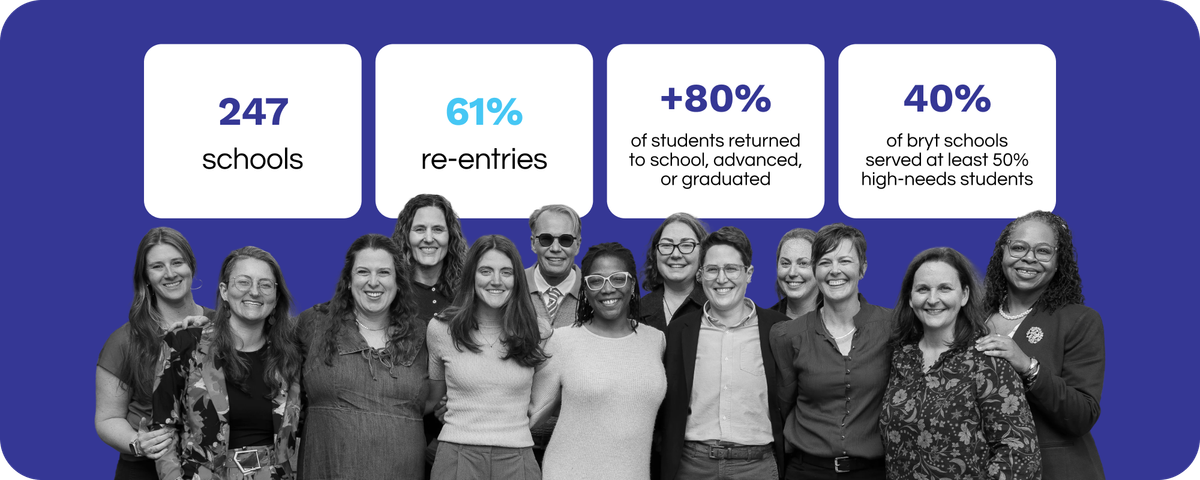
Evidence of a Shared Journey
Our newest 2025-26 Data Report provides a glimpse into the impact of this integrated approach. While the data is impressive, the true story lies in the lives transformed:
- A Commonwealth-Wide Commitment: More than 50% of all public high school students in Massachusetts are in schools implementing the bryt model. This is a systemic signal of how schools and districts view student support.
- The Path to Graduation: With a 95% graduation rate, the data proves that when we provide the right supports, students don't just survive their return to school—they succeed.
- Breaking the Cycle: A 78% reduction in re-hospitalizations shows that by stabilizing the student within the school environment, we create a sustainable foundation for long-term wellness.
The Architecture of a "Safe Harbor"
The success of bryt is rooted in the belief that a student cannot learn if they do not feel safe. We move from "managing behavior" to "witnessing experience" through a coordinated, interdisciplinary architecture:
The bryt Room serves as the physical home base—a sensory-friendly sanctuary where students can regulate their emotions and return to instruction on their own terms.
Integrated Coordination ensures that the student is wrapped in a circle of care. By aligning a Clinical Coordinator (for emotional stability), an Academic Coordinator (for prioritized learning), and Family Accompaniment (to center the caregiver's voice), we remove the burden of "case managing" from the student.
Individualized Reintegration replaces the "all-or-nothing" return to school. Through a phased approach—from initial stabilization to gradual re-entry—we ensure the transition is paced to the student's actual capacity, preventing the "crash" that often follows a rushed return.
Equity as a Promise
The most meaningful part of our recent growth is where that growth is happening. Through strategic investments from the Massachusetts Department of Mental Health and the State Legislature, we are bringing bryt to the schools that need it most.
Currently, 79% of the schools supported by DMH funding serve majority high-needs student populations. We are working toward a future where mental health support is not a privilege, but a standard of care for every child, regardless of their zip code.
Looking Ahead
As we expand into Connecticut, New York, Ohio, and Rhode Island, our mission remains the same: to provide school leaders with the tools they need to support their most vulnerable students.
We are grateful to the educators and families who have partnered with us over the last two decades. Together, we are proving that with the right structure and a commitment to compassionate care, every student can find their way back to success.
About the Data Report
The bryt Data Report is released annually to provide a transparent, evidence-based look at the progress of our students and the effectiveness of our model. These insights are powered by the bryt Portal, a secure platform used by our staff to track student trajectories, coordinate care, and refine interventions in real-time. By turning daily clinical and academic data into systemic insights, we are able to continuously evolve our approach to ensure every student has the best possible path back to the classroom. Explore the current findings at datareport.brytnational.com.